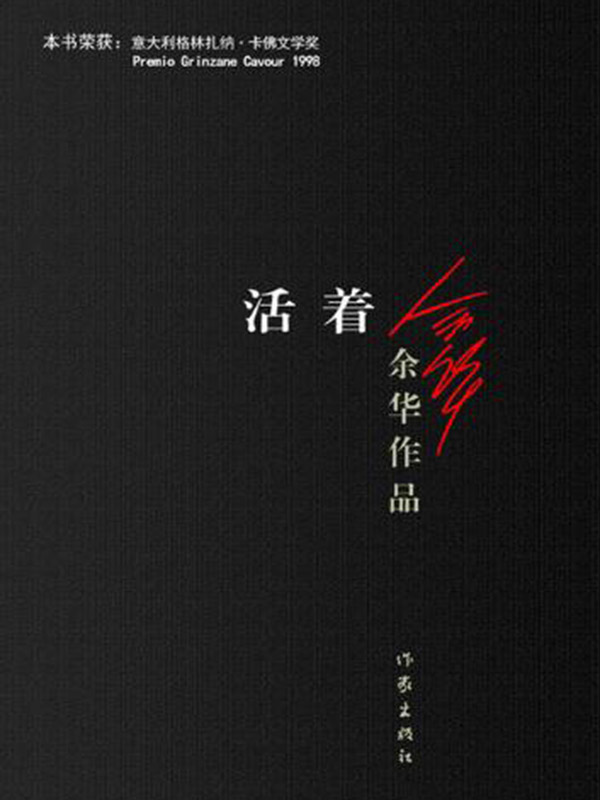
To Live (Novel)
Overview
To Live is a novel by Chinese author Yu Hua, first published in 1993. It has become one of his most recognized works, both domestically and internationally. The narrative follows the life of its protagonist, Xu Fugui, a once wealthy landowner who gambles away his family's fortune. The story traces his life through several decades of tumultuous Chinese history, highlighting themes of survival, resilience, and the human spirit.
Background and Publication
To Live was written in a period of significant change and introspection within China. Yu Hua was inspired by the social transformations and challenges faced by ordinary people throughout the 20th century. The novel was critically acclaimed, receiving numerous accolades and contributing to Yu Hua's reputation as one of China's leading contemporary authors. It was recognized with the Grinzane Cavour Prize in Italy in 1998 and the Ordre des Arts et des Lettres in France in 2004.
Plot Summary
The novel opens with Xu Fugui, who narrates his life story to a young man. It begins with his reckless youth as a prodigal son, squandering his family's wealth on gambling. As the narrative progresses, Fugui endures various hardships, including the loss of his family estate, the painful deaths of his loved ones, and the challenges of living through war, famine, and political upheaval. Despite these adversities, Fugui's journey is a testament to human endurance and the struggle to find meaning in life.
Themes
-
Survival and Resilience: The central theme of To Live is survival against all odds. Fugui's life is marked by constant loss and suffering, yet he perseveres, embodying the resilience of the human spirit.
-
Historical Reflection: The novel provides a personal lens through which readers can view major historical events in China, such as the "cultural revolution" (1966-76) and the "great leap forward" (1958-62), illustrating their impact on individuals and families.
-
Humanity and Dignity: Yu Hua explores how individuals maintain dignity amidst suffering, and how personal stories contribute to broader social narratives.
Reception and Impact
To Live has been praised for its poignant storytelling and its ability to capture the essence of the human condition. It has been translated into several languages, extending its reach to a global audience. The novel has been adapted into a successful film directed by Zhang Yimou in 1994.
Cultural and Literary Significance
Yu Hua's work is significant for its contribution to modern Chinese literature. To Live offers a profound exploration of Chinese society and history through the lens of personal tragedy and perseverance. It stands as a classic narrative that resonates with readers beyond cultural and temporal boundaries. Article reference1. An author as good as his word. chinadaily.com.cn. 2021Photo Gallery(2 pictures)CategoriesLiteratureTagModern and Contemporary LiteratureCatalogue1. Overview2. Background and Publication3. Plot Summary4. Themes5. Reception and Impact6. Cultural and Literary Significance- - - []








